
Featured content

From detection to intelligence: deploying AI-enhanced CT baggage screening at Maastricht Aachen Airport
Maastricht Aachen Airport is the first airport in the world to put an AI-enhanced CT hold baggage screening system into live operation, showing how intelligent technology, human expertise and smarter processes can work together.
 Article
Delivering airport passenger throughput with CT, automation and realistic regulatory models
Global airports are achieving major throughput gains through advanced security screening, but success depends as much on people and processes as on technology.
 Article
Inside San Diego Airport’s efforts to manage aircraft noise
Chris Walker, San Diego International Airport’s Manager of Planning, Noise & Environment, explains how collaboration, monitoring and transparency underpin the airport’s approach to managing aircraft noise.
 Opinion
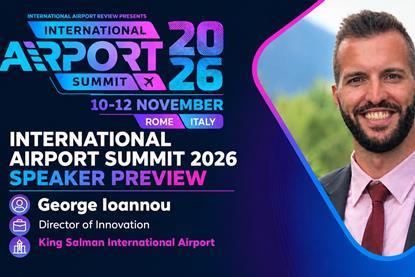
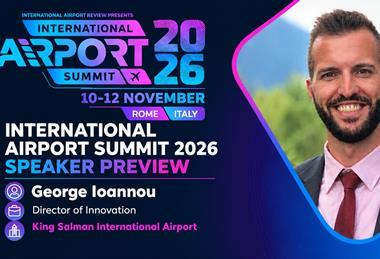
Open innovation in airports: The hard part isn’t finding ideas
George Ioannou, King Salman International Airport’s Director of Innovation, argues airports must focus on adopting and scaling open innovation rather than sourcing ideas.
News
 News
NewsAspire names London City Airport’s first passenger lounge 09:LDN Suite ahead of 2027 opening
Swissport International’s hospitality arm has confirmed the name and general manager for the lounge, which marks the airport’s 40th year and will be open to all passengers.
 News
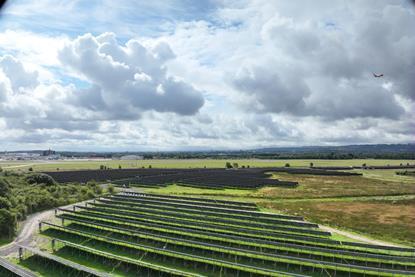
NewsIn-depth: AGS Airports launches Horizons strategy as Glasgow Airport solar farm begins generating power
AGS Airports has unveiled its Horizons sustainability and ESG strategy as a 10MW solar farm at Glasgow Airport begins supplying around a quarter of the airport’s on-site electricity demand, supporting the group’s 2035 net zero target.
 News
NewsMelbourne Airport progresses design of $4.5 billion international terminal expansion after opening new pick-up zones
New artist impressions show how Melbourne Airport’s international terminal will grow into the existing forecourt, as the first phase of a $17 billion privately funded pipeline takes effect.
From our partners
Article
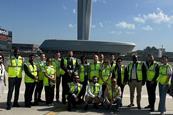
From Istanbul to the world: shaping the future of global aviation capabilities
iGA Academy sets out how connecting structured aviation training with the operational environment of iGA Istanbul Airport can help address the industry’s growing skills requirement.

Airports
Beyond the Runway: How Port Polska is designing a national airport ecosystem
A modern airport is far more than a passenger terminal and runways. This is the approach being taken in the development of Poland’s new national airport and Port Polska, the country’s largest infrastructure project.
- Previous
- Next







Join now
Unlimited access to industry intelligence that can make a difference to your business
- Bookmark articles and resources to access anytime
- Enjoy free access to industry leading resources, webinars and insights
- Stay informed with the latest news and interviews
- Receive updates and recommendations tailored to your professional interests
Upcoming Webinars

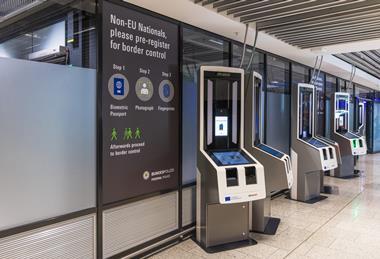
Designing the airport checkpoint of the future: Security, throughput and workforce reality
Hear industry leaders discuss how airports can balance security, passenger flow and workforce constraints today, while preparing for more automated and self-service checkpoint operations.
Designing the airport checkpoint of the future: Security, throughput and workforce reality
- Previous
- Next
On-demand Webinars
- Previous
- Next